Introduction
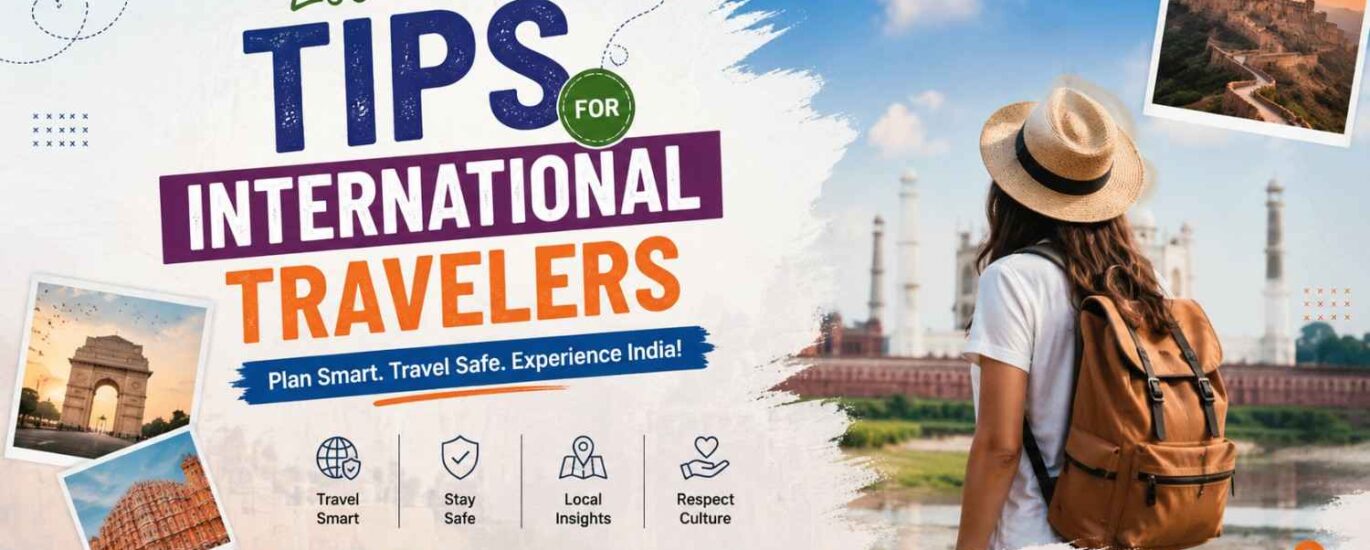
Tips for international travelers can make the difference between a stressful trip and a smooth one. India is a large, diverse country, and first-time visitors often feel overwhelmed by the choices. However, a little preparation goes a long way. This guide covers visas, money, safety, food, transport, and etiquette. Additionally, it answers the questions most visitors ask before landing in India. By the end, you will know exactly how to plan your trip with confidence.
Table of Contents
- Overview
- Why These Tips Matter
- Visa And Entry Requirements
- Best Time To Visit
- How To Reach India
- Getting Around: Transportation Tips
- Money, Costs, And Budget Guide
- Luxury Travel Options
- Where To Stay
- Suggested First-Time Itinerary
- Local Food And What To Eat
- Shopping Tips
- Safety Tips
- Local Etiquette And Culture
- Packing Tips
- Common Mistakes To Avoid
- Nearby Attractions Worth Adding
- FAQs
Overview
India welcomes millions of foreign visitors every year, and each region offers a different experience. Rajasthan brings forts and desert culture. Kerala offers backwaters and beaches. Delhi and Agra cover the classic Golden Triangle. Therefore, the tips below apply broadly, but always check specifics for your chosen region before you travel.
Why These Tips Matter
Many first-time visitors underestimate how different travel in India can be compared to their home country. Traffic patterns, payment methods, and food hygiene all work differently here. Moreover, small mistakes like drinking tap water or ignoring dress codes at temples can ruin a good day. On the other hand, travelers who prepare well often say India becomes one of their favorite trips.
Visa And Entry Requirements
Most international travelers need a visa to enter India. The e-Visa is the simplest option for tourists from eligible countries. You apply online, usually 4 to 120 days before arrival, and receive approval by email. Furthermore, keep a printed and digital copy of your e-Visa approval, since immigration officers may ask for both. Passports must have at least six months of validity remaining. For longer stays or specific purposes, check whether you need a regular visa instead.
Best Time To Visit
October to March is generally the most comfortable period for most of India. Temperatures stay mild in the north, and humidity drops in the south. Summer months, from April to June, get very hot in cities like Delhi and Jaipur. Meanwhile, the monsoon season from July to September brings heavy rain to Kerala and the western coast. For hill stations like Manali or Shimla, however, summer is actually the peak season.
How To Reach India
International flights land at major hubs like Delhi, Mumbai, Bengaluru, and Chennai. Delhi’s Indira Gandhi International Airport handles the most foreign arrivals. Additionally, many travelers connect through Dubai, Doha, or Singapore for better fares. Book airport transfers in advance, especially for late-night arrivals.
Getting Around: Transportation Tips
India offers many transport options, and choosing the right one saves both time and money.
- Trains: Comfortable for long distances; book AC classes for a better experience.
- Domestic flights: Fast for covering large distances like Delhi to Kerala.
- Private cars with driver: Convenient and safe for tourists on multi-city trips.
For multi-city tours, a private car with an English-speaking driver is often the easiest choice. It removes the stress of navigating unfamiliar routes.
Money, Costs, And Budget Guide
The Indian Rupee (INR) is the local currency. Carry some cash, since smaller towns and local markets do not always accept cards. However, UPI and card payments are now common in cities and tourist areas. A budget traveler can manage on $90 to $120 per day, covering basic stays and street food. Mid-range travelers should plan $120 to $200 per day for comfortable hotels and restaurants.
Luxury Travel Options
For travelers who prefer comfort, India has a strong luxury travel scene. Heritage palace hotels in Rajasthan, five-star resorts in Kerala, and private guided tours are all available. Luxury train journeys, such as royal heritage trains, also give a unique way to see multiple cities. Private tours with dedicated vehicles and guides remove most of the logistical stress for high-end travelers.
Where To Stay
Choose accommodation based on your itinerary and comfort level. Boutique hotels and homestays offer a more local experience. International hotel chains provide familiar comfort in major cities. Meanwhile, heritage properties in Rajasthan give a memorable stay inside converted forts and palaces. Book centrally located hotels to reduce daily travel time between sights.
Suggested First-Time Itinerary
A 7 to 10 day Golden Triangle tour works well for most first-time visitors.
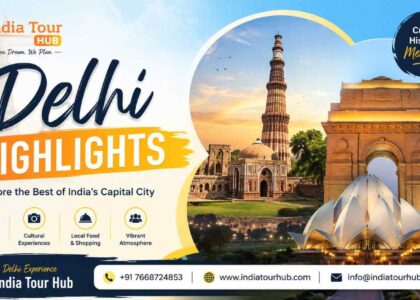
- Delhi (2 days): Red Fort, Humayun’s Tomb, India Gate, Chandni Chowk,, Qutab minar.
- Agra (1 day): Taj Mahal at sunrise, Agra Fort.
- Jaipur (2 days): Amber Fort, City Palace, Hawa Mahal.
- Optional extension: Ranthambore for a tiger safari, or Udaipur for lake views.
This route balances history, culture, and manageable travel distances between cities.
Local Food And What To Eat
Indian food varies significantly by region, so trying local dishes is part of the experience. In the north, try butter chicken, chole bhature, and fresh naan. In the south, dosa, idli, and filter coffee are local favorites. Street food is delicious, but choose stalls with high turnover and visible hygiene. Additionally, stick to bottled or filtered water, and avoid ice in drinks from unknown sources.
Shopping Tips
India is known for handicrafts, textiles, and jewelry. Bargaining is expected in local markets, though not in fixed-price shops or malls. Popular buys include Pashmina shawls in Kashmir, block-printed textiles in Jaipur, and leather goods in Agra. Always ask for a proper bill for expensive items like gemstones.
Safety Tips
India is generally safe for international travelers who take normal precautions. Keep copies of your passport and visa separately from the originals. Use registered taxis or ride-hailing apps rather than unmarked vehicles. Moreover, avoid walking alone in unfamiliar areas late at night. Solo female travelers should choose women-only train compartments where available and dress modestly in conservative areas. Travel insurance is strongly recommended for medical emergencies.
Local Etiquette And Culture
Respecting local customs improves your experience significantly. Remove your shoes before entering temples and many homes. Dress modestly when visiting religious sites, covering shoulders and knees. Additionally, use your right hand for eating and giving or receiving items, since the left hand is considered less polite. Public displays of affection are uncommon and best avoided in conservative areas. A simple “Namaste” with folded hands is a warm way to greet people.
Packing Tips
Pack light, breathable clothing for most of the year, along with a light jacket for winter evenings in the north. Modest clothing works best for temple visits and rural areas. Additionally, carry sunscreen, insect repellent, and any personal medication in original packaging. A universal power adapter is essential, since India uses Type C, D, and M sockets. Comfortable walking shoes are a must for exploring forts and markets.
Common Mistakes To Avoid
- Drinking tap water instead of bottled or filtered water.
- Overpacking the itinerary without buffer time for traffic delays.
- Ignoring dress codes at religious sites.
- Skipping travel insurance to save money.
Avoiding these mistakes keeps the trip smoother and less stressful.
Nearby Attractions Worth Adding
If time allows, extend your trip to nearby regions for more variety. Varanasi offers a spiritual experience along the Ganges River. Rishikesh appeals to travelers interested in yoga and adventure sports. Meanwhile, Goa is ideal for beach relaxation after a busy cultural tour. Each of these can be added as a short extension to a Golden Triangle itinerary.
FAQs
1. Do I need a visa to visit India?
Yes, most international travelers need a visa. The e-Visa is the easiest option for eligible nationalities and can be applied for online before travel.
2. Is tap water safe to drink in India?
No, tap water is not recommended for travelers. Stick to bottled or filtered water throughout your trip.
3. What is the best time to visit India?
October to March offers the most comfortable weather across most regions, though hill stations are better visited in summer.
4. How many days do I need for the Golden Triangle tour?
A 5 to 7 day trip comfortably covers Delhi, Agra, and Jaipur, with extra days for optional extensions.
5. Is India safe for solo female travelers?
Yes, with standard precautions. Choose registered transport, dress modestly, and avoid isolated areas late at night.
6. What currency should I carry?
The Indian Rupee is the only accepted currency. Carry some cash along with a card, since not all places accept digital payment.
7. Do I need travel insurance for India?
Yes, travel insurance is strongly recommended to cover medical emergencies, trip delays, or lost luggage.
8. What should I wear when visiting temples?
Modest clothing that covers shoulders and knees is expected. Shoes must be removed before entering most temples.
9. Is it necessary to hire a private guide or driver?
Not necessary, but it is highly recommended for first-time visitors, since it removes navigation stress and adds local insight.
10. What vaccinations do I need before traveling to India?
Requirements vary by traveler; consult a travel clinic beforehand for recommendations such as hepatitis A, typhoid, and routine vaccines.
Plan Your Trip With India Tour Hub
Planning a trip to India does not need to be overwhelming. India Tour Hub offers Private Tours, Golden Triangle Tours, Same Day Tours, Rajasthan Tours, North India Tours, and fully Customized India Tour Packages designed around your interests and schedule. Our local experts handle the logistics, so you can focus on the experience. Contact us today at info@indiatourhub.com or What’s App: +91 7668724853, or visit https://indiatourhub.com to start planning your personalized India journey.