Introduction
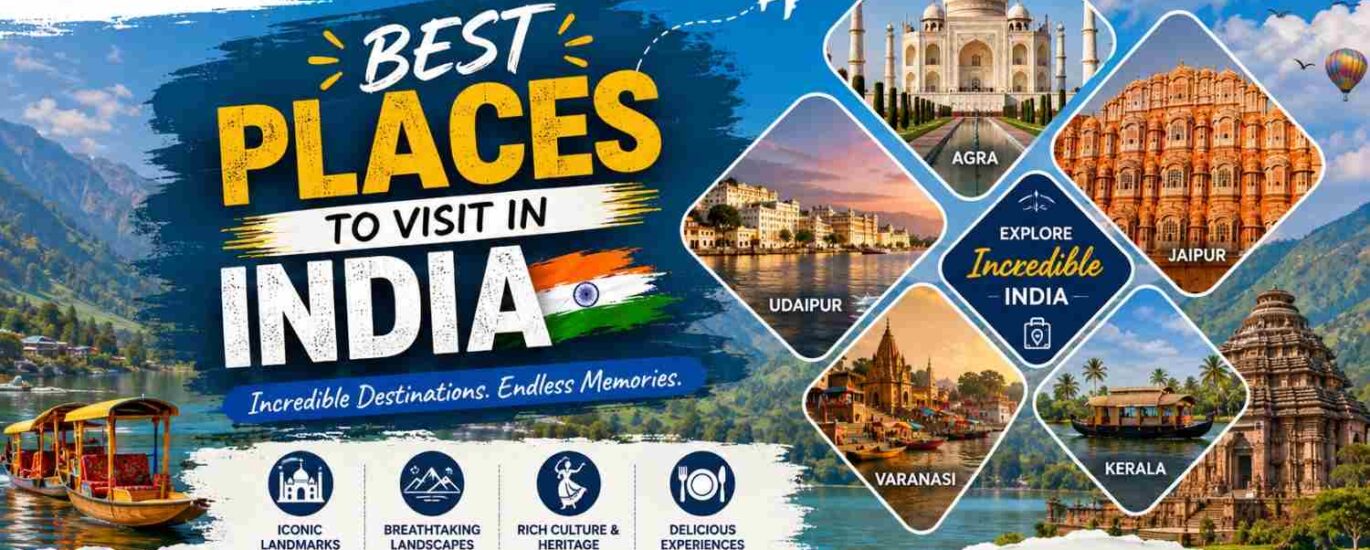
Best places to visit in India range from snow-capped mountains in the north to palm-lined beaches in the south. India is a country of contrasts, and that is exactly what makes it special. You can visit a 400-year-old fort in the morning and relax on a houseboat by evening. Additionally, each state has its own language, food, and culture, so no two trips ever look the same. This guide walks you through the top destinations, the best time to visit, travel costs, and practical tips. Whether you have ten days or a full month, you will find a route that fits your plan.
Table of Contents
- Overview of Travel in India
- Why Visit India
- Top Attractions Across India
- Things to Do in India
- Best Time to Visit India
- How to Reach India
- Getting Around: Transportation Tips
- Entry Fees and Opening Hours
- Suggested 10-Day Itinerary
- Nearby Attractions Worth a Detour
- Local Food You Must Try
- Shopping in India
- Travel Tips for First-Time Visitors
- Safety Tips
- Packing Tips
- Budget Guide
- Luxury Travel Options
- Common Mistakes to Avoid
- FAQs
- Plan Your Trip With India Tour Hub
Overview of Travel in India
India is the seventh-largest country in the world, and its size shows in its variety. Rajasthan offers desert forts and royal palaces. Kerala offers quiet backwaters and green hills. Meanwhile, Uttar Pradesh is home to the Taj Mahal, one of the most photographed buildings on earth. Most first-time visitors fly into Delhi or Mumbai and then branch out from there. For example, Delhi connects easily to the Golden Triangle route covering Agra and Jaipur. Therefore, planning your entry city matters as much as picking your destinations.
Why Visit India
India rewards travelers who want more than a checklist of landmarks. History lovers can walk through Mughal-era forts and ancient temples. Nature lovers can trek in the Himalayas or spot tigers in Ranthambore National Park. Food lovers can eat their way through five different regional cuisines in a single trip. Moreover, India offers exceptional value. A meal that costs 20 dollars in Europe often costs 3 to 5 dollars here, without a drop in quality. On the other hand, India also has world-class luxury hotels and private tours for travelers who want comfort. This mix of budget and premium options is rare to find in one country.
Top Attractions Across India
Taj Mahal, Agra
The Taj Mahal is a white marble mausoleum built by Emperor Shah Jahan for his wife Mumtaz Mahal. It took 22 years to complete and remains India’s most visited monument. Sunrise visits are best, since the marble changes color as the light shifts.
Jaipur, Rajasthan
Jaipur is called the Pink City because of the color of its old town buildings. Amber Fort, City Palace, and Hawa Mahal are the three sites most visitors prioritize. Additionally, the local bazaars sell block-printed textiles and blue pottery at fair prices.
Kerala Backwaters
The backwaters of Alleppey and Kumarakom offer a slow-paced houseboat experience through palm-fringed canals. This region is ideal for travelers who want to unwind after a busy city itinerary.
Varanasi
Varanasi sits on the banks of the Ganges River and is one of the oldest continuously inhabited cities in the world. The evening Ganga Aarti ceremony at Dashashwamedh Ghat draws large crowds every day.
Goa
Goa mixes Portuguese-era churches with lively beaches. North Goa suits travelers who want nightlife, while South Goa suits those who prefer quiet resorts.
Ladakh
Ladakh is a high-altitude desert region known for Buddhist monasteries, Pangong Lake, and dramatic mountain passes. However, it is only accessible by road or air for a few months each year due to snow.
Rishikesh
Rishikesh is known as the yoga capital of the world. Beyond yoga, it also offers white-water rafting on the Ganges and cliffside cafes overlooking the river.
Ranthambore National Park
Ranthambore is one of the best places in India to spot a wild tiger. Morning and evening safaris run daily, though sightings are never guaranteed.
Things to Do in India
- Watch the sunrise at the Taj Mahal
- Take a houseboat cruise in Kerala
- Attend the Ganga Aarti in Varanasi
- Go on a wildlife safari in Ranthambore or Jim Corbett
- Practice yoga in Rishikesh
- Explore forts and palaces in Jaipur and Udaipur
- Trek in the Himalayas around Manali or Ladakh
- Relax on the beaches of Goa
Best Time to Visit India
The best time to visit most of India is between October and March, when temperatures are cooler and skies stay clear. Summer, from April to June, gets very hot in the plains, though hill stations like Shimla and Manali stay pleasant. Monsoon season runs from July to September and brings heavy rain to most regions, but it is also when Kerala looks its greenest. For Ladakh specifically, the travel window is shorter, running from May to September, since mountain passes stay closed the rest of the year.
How to Reach India
Most international travelers arrive through Indira Gandhi International Airport in Delhi or Chhatrapati Shivaji Maharaj International Airport in Mumbai. Both airports connect to major hubs in Europe, the Middle East, and Southeast Asia. Visa on arrival is not available for most nationalities, so applying for an e-Visa online before travel is the standard route. Processing usually takes a few business days, so it helps to apply at least two weeks ahead.
Getting Around: Transportation Tips
India’s train network is one of the largest in the world and connects nearly every city worth visiting. Booking a few weeks ahead secures better seats, especially in peak season. For shorter distances, private cars with drivers are common and affordable for tourists. Domestic flights work well for longer hops, such as Delhi to Kerala. Meanwhile, within cities, ride-hailing apps like Uber and Ola are reliable in most metro areas. Auto-rickshaws remain a fun, budget option for short trips, though negotiating the fare beforehand is important.
Entry Fees and Opening Hours
Entry fees vary widely by site and by nationality, since India charges foreign tourists a higher rate than domestic visitors. The Taj Mahal costs around 1,100 rupees for foreign visitors and is closed on Fridays. Forts and palaces in Rajasthan typically charge between 200 and 700 rupees for foreign tourists. National parks like Ranthambore charge separately for entry and for the safari vehicle. Most monuments open by 8:00 or 9:00 AM and close by 5:00 or 6:00 PM, though timings shift slightly by season.
Suggested 10-Day Itinerary
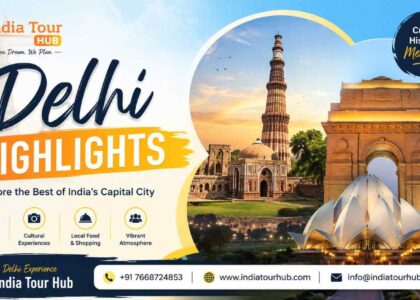
- Day 1-2: Delhi — Red Fort, Humayun’s Tomb, Qutub Minar
- Day 3: Agra — Taj Mahal and Agra Fort
- Day 4-5: Jaipur — Amber Fort, City Palace, local bazaars
- Day 6: Udaipur — Lake Pichola and City Palace
- Day 7-8: Kerala Backwaters — Houseboat stay in Alleppey
- Day 9-10: Goa — Beaches and Portuguese heritage sites
This route covers the Golden Triangle, Rajasthan, and two very different souths, giving first-time visitors a realistic taste of the country’s range.
Nearby Attractions Worth a Detour
Travelers visiting Agra can add Fatehpur Sikri, a well-preserved Mughal city just 40 minutes away. Those in Jaipur can detour to Pushkar, known for its holy lake and camel fair. From Rishikesh, Haridwar is a short drive and offers its own evening river ceremony. Similarly, travelers in Kerala can combine backwater stays with a short trip to Munnar’s tea plantations.
Local Food You Must Try
North Indian food centers on wheat breads, rich gravies, and tandoor-cooked meats. Try butter chicken, dal makhani, and fresh naan in Delhi or Jaipur. South Indian food leans toward rice, coconut, and fermented batters. Dosa, idli, and sambar are staples worth trying in Kerala or Tamil Nadu. Street food is a big part of the experience too; chaat in Delhi and vada pav in Mumbai are both cheap and full of flavor. For example, a plate of street chaat rarely costs more than 500 rupees, yet it is often the most memorable meal of the trip.
Shopping in India
Jaipur is known for block-printed textiles, blue pottery, and gemstones. Kashmir produces fine pashmina shawls and hand-knotted carpets. Kerala offers spices like cardamom and black pepper at prices far below international markets. Bargaining is expected in most local markets, though fixed-price government emporiums offer a no-haggle alternative. Additionally, always ask for a certificate of authenticity when buying gemstones or carpets to avoid counterfeit goods.
Travel Tips for First-Time Visitors
- Carry both cash and a card, since small vendors often do not accept digital payment
- Dress modestly at religious sites, covering shoulders and knees
- Remove shoes before entering temples and some homes
- Drink bottled or filtered water rather than tap water
- Keep a printed copy of your e-Visa and hotel bookings
Safety Tips
India is generally safe for tourists who take standard precautions. Avoid walking alone in unfamiliar areas late at night, and use registered taxis or ride-hailing apps rather than unmarked vehicles. Keep valuables in a hotel safe when possible, and stay alert in crowded tourist spots where pickpocketing can occur. Furthermore, it is wise to keep a photocopy of your passport separate from the original in case of loss.
Packing Tips
Pack light, breathable cotton clothing for most of the year, along with a light jacket for cooler evenings and hill stations. A scarf or shawl is useful both for temple visits and for protection from sun or dust. Comfortable walking shoes matter more than style, given the amount of walking most itineraries involve. Don’t forget sunscreen, insect repellent, and any personal medication, since not every brand is easy to find locally.
Budget Guide
A budget traveler can manage on 75 to 95 dollars a day, covering hostels, street food, and public transport. A mid-range trip, with 3-star hotels, private cars, and restaurant meals, typically runs 120 to 190 dollars a day. Costs vary by region too; Goa and Kerala tend to run slightly higher than Rajasthan or Uttar Pradesh. Therefore, building in a buffer for entry fees, tips, and shopping is a smart move when setting your daily budget.
Luxury Travel Options
India’s luxury segment includes heritage palace hotels in Rajasthan, where former royal residences have been converted into five-star properties. Kerala’s backwaters offer premium houseboats with private chefs and air-conditioned cabins. For travelers who want a fully planned trip, private guided tours remove the guesswork around transport, entry tickets, and timing. This is where a tailored itinerary from a local operator adds real value over independent planning.
Common Mistakes to Avoid
Many first-time visitors try to pack too many cities into too few days, which leads to exhausting travel days instead of real exploration. Others skip travel insurance, which becomes a costly mistake if plans change unexpectedly. Some travelers also underestimate distances between cities, not realizing that a “short” 300-kilometer drive can take 6 to 7 hours on Indian roads. Finally, ignoring local dress codes at religious sites can lead to being turned away at the entrance.
FAQs
1. What are the best places to visit in India for first-time travelers?
Delhi, Agra, and Jaipur form the Golden Triangle and are the easiest introduction to India’s history and culture.
2. How many days are enough to see India?
Ten to fourteen days is enough for a solid introduction, though India rewards repeat visits given its size.
3. Is India safe for solo travelers?
Yes, with standard precautions like avoiding late-night solo walks and using verified transport options.
4. What is the best time of year to visit India?
October to March offers the most comfortable weather across most regions.
5. Do I need a visa to visit India?
Most foreign nationals need an e-Visa, which should be applied for online before departure.
6. What is the currency used in India?
The Indian Rupee (INR) is the official currency, and cash is still useful alongside cards.
7. Is the water safe to drink in India?
Tap water is not recommended for tourists; stick to bottled or filtered water.
8. What should I wear when visiting temples in India?
Modest clothing that covers shoulders and knees, along with removing shoes before entry.
9. Can I see the Taj Mahal in a day trip from Delhi?
Yes, a day trip is possible by car or train, though staying overnight allows time for both sunrise and sunset views.
10. What is the best way to travel between cities in India?
Trains work well for most routes, while domestic flights save time on longer distances.
Plan Your Trip With India Tour Hub
Ready to turn this guide into a real itinerary? India Tour Hub designs Private Tours, Golden Triangle Tours, Same Day Tours, Rajasthan Tours, North India Tours, and fully Customized India Tour Packages built around your dates and interests. Reach out at info@indiatourhub.com or What’s App: +91 7668724853 to start planning, or visit indiatourhub.com to browse tour options today.